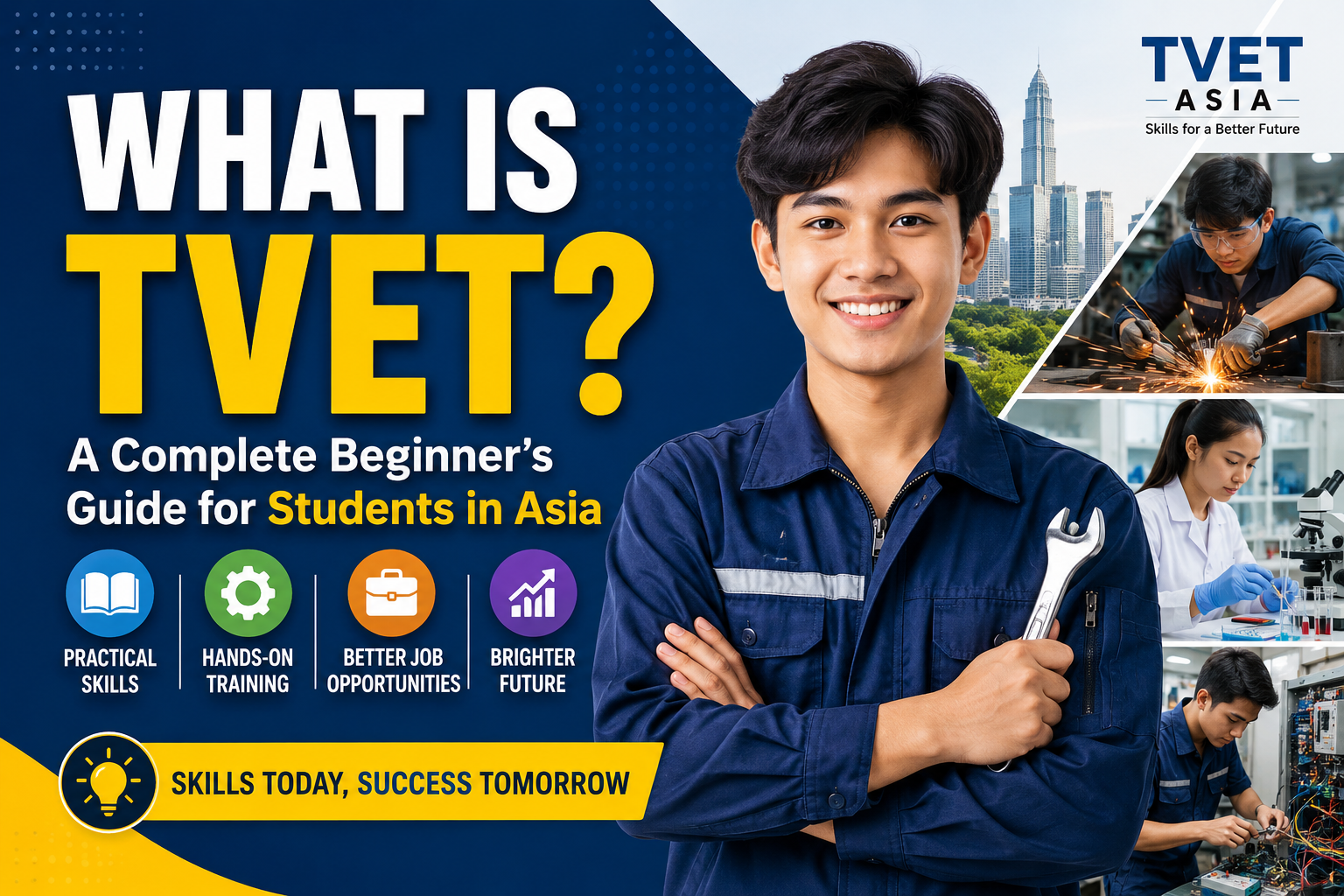
Technical and Vocational Education and Training (TVET) is an education system that prepares people with practical skills and technical knowledge needed for specific careers. Unlike traditional academic education, TVET focuses on hands-on learning, allowing students to gain experience with real tools, equipment, and workplace situations.
Across Asia, TVET is becoming one of the fastest-growing education pathways because industries need skilled workers more than ever. From information technology and manufacturing to healthcare, hospitality, construction, and renewable energy, employers are looking for graduates who can perform practical tasks from day one.
Whether you are a recent school graduate, a job seeker, or someone planning a career change, TVET can open doors to exciting opportunities.
Asia is home to some of the world's fastest-growing economies. Countries are investing heavily in infrastructure, digital transformation, smart manufacturing, and green industries. These developments have created a strong demand for skilled professionals.
Many employers report that finding qualified technicians and skilled workers is one of their biggest challenges. TVET helps bridge this skills gap by providing industry-relevant training that matches current labor market needs.
Governments across Asia are also strengthening partnerships between training institutions and industries to ensure graduates are ready for employment immediately after completing their programs.
Many students wonder whether they should choose university or TVET. The answer depends on their career goals.
Traditional education generally focuses on theoretical knowledge and academic research. TVET combines classroom learning with practical training, workshops, internships, and workplace experience.
For students who enjoy solving practical problems, working with technology, creating products, or providing professional services, TVET often provides a faster path to employment.
Importantly, choosing TVET does not mean giving up higher education. Many countries now offer pathways that allow TVET graduates to continue toward diplomas, bachelor's degrees, and even postgraduate qualifications.
There are many reasons why students across Asia are choosing TVET.
Some of the fastest-growing TVET fields include:
These sectors continue to expand due to digital transformation and increasing industrial development across Asia.
Technical knowledge alone is no longer enough. Employers also value professional skills such as:
Students who combine technical expertise with strong soft skills are more competitive in today's job market.
Graduates have many career options depending on their chosen specialization.
For example:
Many graduates also become entrepreneurs by launching training centers, digital agencies, repair businesses, manufacturing workshops, or consulting services.
TVET may be the right choice if you:
There is no single path to success. What matters most is developing skills that solve real-world problems and create value for employers, businesses, and communities.
The future of work is changing rapidly, and practical skills are becoming more valuable than ever. Technical and Vocational Education and Training (TVET) provides students with the knowledge, confidence, and experience needed to succeed in today's competitive job market.
Whether your goal is employment, entrepreneurship, or further education, TVET offers a flexible and rewarding pathway. By choosing the right training program and continuously improving your skills, you can build a successful career and contribute to the growth of your community and the economy.
Your future starts with skills—and TVET is one of the strongest foundations for that journey.